

Trip Facts
- Total Duration 23 days
- Trip Grade Moderate-Strenuous Plus
- Max Altitude 6461m.
- Start From Phaplu
- End From Lukla
- Min Size 2 pax
- Max Size 10 pax
- Trip Mode Trekking/Climbing
- Accommodation Tea House/Camping
- Best Season: Sep-Nov and Late March to May
Trip Highlights
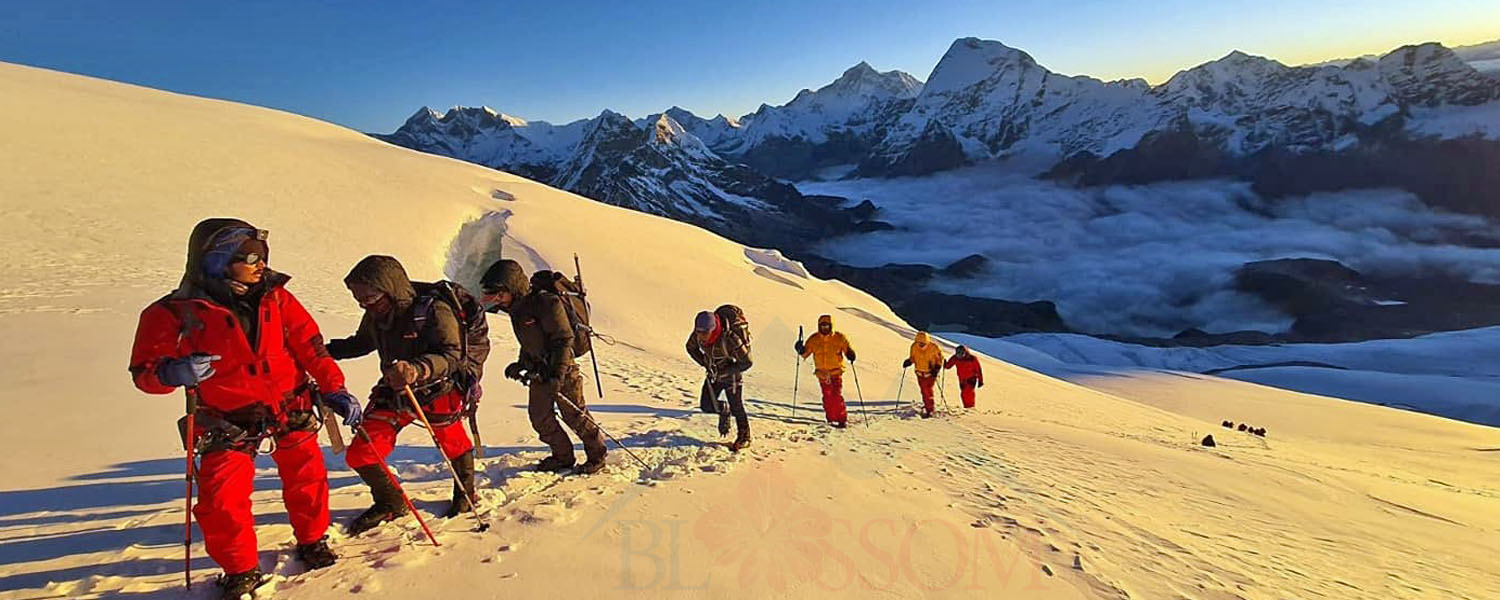
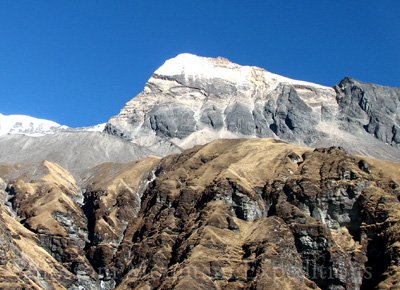
- Mera Peak Summit (6,461m): Reach the summit of Mera Peak, standing at 6,461m, and enjoy panoramic views of the world’s highest peaks, including Everest, Lhotse, and Makalu.
- Breathtaking Himalayan Scenery: Witness the stunning landscapes of eastern Nepal, with beautiful river valleys, glaciers, and pristine mountain lakes.
- Picturesque Villages and Cultural Landmarks: Trek through charming mountain villages and delve into the rich cultural heritage with visits to Buddhist monasteries, stupas, and Mani walls.
- Beginner-Friendly with Basic Climbing Skills: Mera Peak offers a relatively less technical climb suitable for beginners, requiring just basic knowledge.
Mera Peak Climbing in Nepal – A Beginner-Friendly Himalayan Adventure
Mera Peak (6,461m) is one of Nepal’s most popular trekking peaks and an excellent choice for beginner climbers seeking a Himalayan mountaineering experience. Known for its relatively less technical climb and breathtaking mountain scenery, Mera Peak Climbing offers an unforgettable adventure in the eastern Himalayas of Nepal.
From the summit of Mera Peak, climbers can enjoy spectacular panoramic views of some of the world’s highest mountains. To the north, the stunning peaks of Mount Everest, Mount Lhotse, and Nuptse dominate the skyline. To the east, climbers can witness Chamlang, Kangchenjunga, Mount Makalu, and Baruntse, while the western horizon features Cho Oyu, Ama Dablam, and Kangtega.
Why Choose Mera Peak Climbing?
Mera Peak Climbing is considered one of the best beginner-friendly peak climbing adventures in Nepal. Compared to other Himalayan trekking peaks, the climb is less technically demanding and suitable for climbers with basic mountaineering skills and good physical fitness.
Climbers only need basic knowledge of using climbing equipment such as crampons, ice axes, harnesses, and fixed ropes. For safety, climbers are attached to fixed ropes near the summit section, making the ascent safer and more manageable for first-time climbers.
Mera Peak Climbing Routes
There are two main routes to reach the Mera Valley and Mera Peak Base Camp. Climbers can either fly to Lukla or drive to Phaplu before starting the trek.
The Lukla route crosses the challenging Chhatra La Pass and involves steep ascents. During late November and early March, climbing equipment may be necessary due to snow and icy conditions. Proper acclimatization is important, as altitude sickness can be a concern on this route.
The Phaplu route is less demanding and provides better acclimatization opportunities. This scenic trail passes through Taksindu La (2,930m), Nunthala, Kharikhola, and Surke La Pass (3,085m). The route also passes through the beautiful Five Holy Lakes (Panch Pokhari) and the peaceful Hinku Valley before reaching Mera Peak.
Acclimatization and Mera Peak Base Camp
Before the summit push, climbers spend time acclimatizing and training in Thangnak and Khare. These acclimatization days help climbers adjust to the high altitude and learn how to use climbing equipment properly.
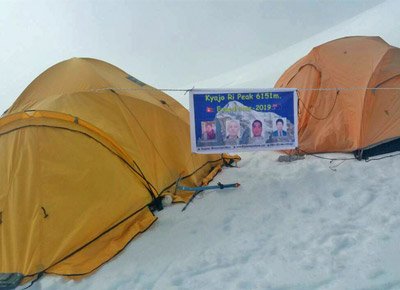
Mera Peak Base Camp is located at 5,415 meters, while High Camp sits at 5,700 meters. After successfully reaching the summit, climbers descend to Khare and trek toward Lukla, crossing the Chhatra La Pass on the return journey.
Mera Peak Climbing Difficulty and Best Experience
Mera Peak is an ideal choice for trekkers looking for a non-technical Himalayan climbing experience with extraordinary mountain views. Its gradual ascent, relatively easier climbing route, and rewarding summit panorama make it one of the best trekking peaks in Nepal for beginners.
Join the experienced team at Blossom Expeditions and safely achieve your dream of standing on the summit of Mera Peak while enjoying one of the most memorable adventures of your life.
Trip Itinerary
| Days | program |
| 01 | Arrival at Kathmandu (1300m) International Airport, meet our representative and transfer to your hotel. |
| 02 | Preparation day of the trip and obtain a climbing permit. |
| 03 | Drive to Phaplu-2435m. 9-10 hours |
| 04 | Trek to Taksindu (2900m) 7-8 hours |
| 05 | Trek to Kharikhola-2020m. 5-6 hours |
| 06 | Trek to Panggom-2890m. 3-4 hours |
| 07 | Trek to Najingdingmo-2650m. 6-7 hours |
| 08 | Trek to Cholem Kharka-3500m. 6-7 hours |
| 09 | Trek to Khola Kharka-3300m. 5-6 hours |
| 10 | Trek to Kothe-3690m. 4-5 hours |
| 11 | Trek to Thangnak-4355m. 6-7 hours |
| 12 | Acclimatization day |
| 13 | Trek to Khare-5000m. 3-4 hours |
| 14 | Acclimatization day |
| 15 | Trek to Mera la-5415m. 3-4 hours |
| 16 | Trek to High Camp-5700m. 4-5 hours |
| 17 | Summit Mera Peak (6461m) and return to Mera-la, 9-11 hours |
| 18 | Trek to Kothe-3690m. 4-5 hours |
| 19 | Trek to Thuli Kharka-4320m. 5-6 hours hours |
| 20 | Trek to Lukla-2800m. 7-8 hours |
| 21 | Early morning, fly to Manthali and drive to Kathmandu |
| 22 | Free Day |
| 23 | Departure for Home |
Trip Cost
| Per Person | U.S. $2995 |
| Single Supplement | U.S. $100 |
| Trip Deposit | U.S. $1000 |
Single Supplement in KTM only
What's Included
- Peak climbing permit
- Three meals a day (breakfast, lunch, and dinner) with tea/coffee
- Accommodation during the trek and climbing (tent accommodation) on a sharing basis
- trekking guide, climbing guides, and other support staff wages, food, accommodation, and insurance
- Climbing guide equipment
- Climbing and camping equipment, including tents, one kitchen/dining tent, snow bars, ropes, EP gas and stove, ice screws, and kitchen utensils required at Base Camp and High Camp
- Four nights’ accommodation in a tourist-standard hotel in Kathmandu
- Lukla–Kathmandu airfare for you, the guide, and the climbing guide
- Personal climbing gear rental
- Transfer Kathmandu-Phaplu-Kharikhola, by 4WD Jeep.
- Airport transfers
- National Park permit and TIMS card fees
- Garbage deposit fee
- Conservation area permit fee
- All government taxes
What's Excludes
- Cold drinks, hard drinks, and bottled water
- Hot showers
- Meals in Kathmandu
- Travel insurance, emergency evacuation, and personal medical expenses
- Donations along the trail and anything not mentioned above
- Guide and transfer services in Kathmandu for sightseeing
- Tips for staff
Trip Equipments
Equipment the Company Provides
- Expedition tents and one kitchen/dining tent
- Snow bars and snow stakes
- Main climbing rope and fixed ropes
- Cooking gas (LPG/EP gas) and stoves
- Ice screws
- Complete kitchen equipment
- Porter clothing (jackets and boots, if required)
- Climbing helmet
- Jumar/ascender
- Ice axe
- Climbing harness
- Belay/rappel device (Figure 8 or ATC). If you have your own, you may use it.
- Crampons (compatible with climbing boots)
- Carabiners (locking and non-locking, as required)
- High-altitude climbing boots
Personal Equipment List
Bags & Storage
- Small daypack (30–40 L)
- Main backpack or expedition duffel bag (80–100 L)
- Waterproof stuff sacks or dry bags
Clothing
- Down or synthetic insulated jacket (expedition weight recommended)
- Waterproof and windproof shell jacket (Gore-Tex)
- Waterproof and windproof shell pants
- Fleece or softshell jacket
- Lightweight and midweight trekking shirts (synthetic or merino wool)
- Base layers (thermal tops and bottoms made of synthetic or merino wool)
- Cotton and polypropylene T-shirts
- Trekking pants
- Warm hat (wool or fleece)
- Sun hat
- Balaclava or buff with ear protection
Hands & Feet
- Inner liner gloves
- Insulated climbing gloves
- Waterproof shell gloves or mittens (Gore-Tex or similar)
- Long gaiters
- Trekking boots
- Camp shoes/sandals
- Thick woolen socks (at least 2 pairs)
- Trekking socks (3–4 pairs)
Sleeping & Hydration
- Four-season sleeping bag (rated to at least -25°C)
- Sleeping bag liner (recommended)
- Insulated water bottles or a hydration bladder
- Thermos flask (recommended for high camps)
Climbing Accessories
- Headlamp with spare batteries
- Sunglasses (UV 400 with glacier protection)
- Ski goggles (recommended for summit day)
- Personal Items & Safety
- Sunscreen (SPF 50+) and lip balm with UV protection
- Personal towel
- Personal first-aid kit and prescribed medications
- Water purification tablets, Steripen, or a filter
- Power bank, battery charger, and multi-plug adapter
- Spare batteries
- Trekking poles
- Earplugs
- Camera/action camera
- Notebook and pen
Note: If you do not have all the above equipment, you can buy or rent it upon arrival in Kathmandu.
Trip Highlights
- Mera Peak Summit (6,461m): Reach the summit of Mera Peak, standing at 6,461m, and enjoy panoramic views of the world's highest peaks, including Everest, Lhotse, and Makalu.
- Breathtaking Himalayan Scenery: Witness the stunning landscapes of eastern Nepal, with beautiful river valleys, glaciers, and pristine mountain lakes.
- Picturesque Villages and Cultural Landmarks: Trek through charming mountain villages and delve into the rich cultural heritage with visits to Buddhist monasteries, stupas, and Mani walls.
- Beginner-Friendly with Basic Climbing Skills: Mera Peak offers a relatively less technical climb suitable for beginners, requiring just basic knowledge.
Call Us On
You May Also Like
Chulu West Peak Climbing
Island Peak Climbing
Lobuche Peak Climbing
Naya Kanga Peak Climbing
Pisang Peak Climbing
Tent Peak Climbing